Kuhki Satsujin Your Obsession with Japanese Horror Starts Here

Kuhki Satsujin

Your Obsession with Japanese Horror Starts Here

Latest Articles

Hooked by Design: How Japanese Horror Franchises Rewire Your Brain to Crave More
Deep Dive

Hooked by Design: How Japanese Horror Franchises Rewire Your Brain to Crave More

Japanese horror isn't just scary — it's engineered to be unfinishable. The most successful franchises in the genre don't resolve their dread, they weaponize it into a feedback loop that turns one-time viewers into lifelong obsessives. Here's how the machine actually works.

The Scare You Never Heard Coming: How Japanese Horror Makes Silence Do the Dirty Work
Deep Dive

The Scare You Never Heard Coming: How Japanese Horror Makes Silence Do the Dirty Work

American horror has trained us to brace for the bang — the sudden chord, the face lunging from the dark, the moment our popcorn hits the ceiling. Japanese horror doesn't care about any of that. It's more interested in making you feel like something is already in the room with you, and has been for a while.

Dread on Delay: How Japanese Horror Turns Patience Into Your Worst Enemy
Deep Dive

Dread on Delay: How Japanese Horror Turns Patience Into Your Worst Enemy

Western horror hands you the scare and moves on. Japanese horror makes you sit with what's coming — and that waiting is where the real damage gets done. Directors like Kiyoshi Kurosawa and Takashi Shimizu have basically weaponized your own anticipation against you, and it works every single time.

Hollywood's Japanese Horror Addiction: Why Studios Keep Buying Gold and Shipping Back Gravel
Deep Dive

Hollywood's Japanese Horror Addiction: Why Studios Keep Buying Gold and Shipping Back Gravel

Hollywood has spent decades strip-mining Japanese horror for IP, pouring money into remakes that almost universally disappoint — yet the cycle never stops. We dig into the economics, the creative blind spots, and the cultural arrogance that keeps producing lesser versions of films that were already perfect.

The Room Is the Monster: How Japanese Horror Turns Architecture Into Pure Dread
Deep Dive

The Room Is the Monster: How Japanese Horror Turns Architecture Into Pure Dread

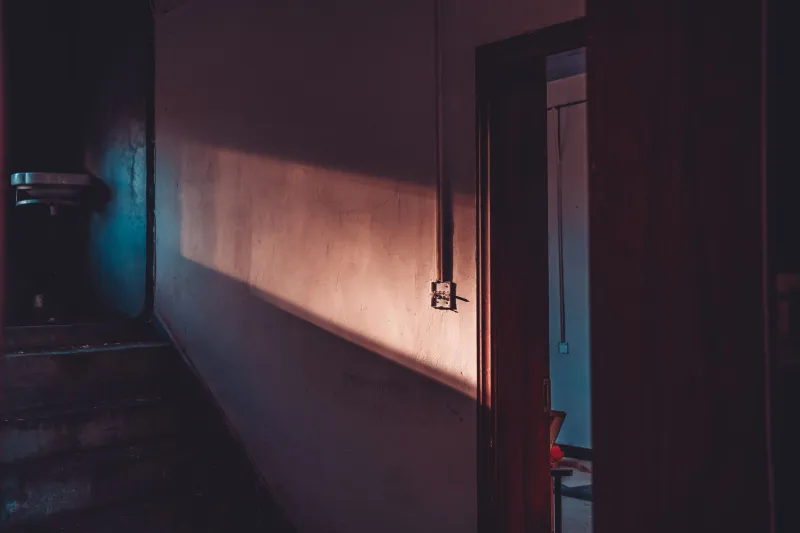
In Japanese horror, the hallway isn't just a hallway. The stairwell isn't just a stairwell. These films treat interior spaces as living, breathing antagonists — and if you've ever felt inexplicably unsettled watching Dark Water or Pulse, now you know why.

Hollywood Keeps Hiring the Wrong Exorcist: How American Remakes Gut Japanese Horror From the Inside Out
Deep Dive

Hollywood Keeps Hiring the Wrong Exorcist: How American Remakes Gut Japanese Horror From the Inside Out

It's not just a language problem. When Hollywood adapts Japanese horror, something far more fundamental gets ripped out — the silence, the ambiguity, the dread that lives in what's never explained. We break down exactly how American production choices keep killing the ghost before it even gets to haunt you.

You Can't Trust Your Own Eyes: How Japanese Horror Weaponizes the Unreliable Narrator
Deep Dive

You Can't Trust Your Own Eyes: How Japanese Horror Weaponizes the Unreliable Narrator

Japanese horror doesn't just scare you — it makes you doubt whether what you just watched actually happened the way you think it did. Through fractured perspectives, subjective camera tricks, and deliberate narrative misdirection, these films turn your own perception into the enemy. This is psychological terror at its most sophisticated.

Death Isn't the Ending: How Japanese Horror Keeps Its Victims Trapped Forever
Deep Dive

Death Isn't the Ending: How Japanese Horror Keeps Its Victims Trapped Forever

In American horror, surviving to the credits means you won. Japanese horror doesn't play by those rules. Franchises like Tomie and Dark Water treat death less like a finish line and more like a revolving door — and that's exactly why they get under your skin in ways Western slashers never could.

Why US Audiences Keep Trying to Solve Japanese Horror Like a Puzzle — And Why That's the Wrong Move
Opinion

Why US Audiences Keep Trying to Solve Japanese Horror Like a Puzzle — And Why That's the Wrong Move

Americans want answers. We want the monster's backstory, the curse explained, the rules established. Japanese horror doesn't work that way — and our relentless need to rationalize it says more about us than it does about the films. The ambiguity isn't a flaw. It's the entire point.

Deep Dive

Stop Scrolling. Japanese Horror Is Watching You Back.

Japanese horror directors don't just want your eyes on the screen — they want your entire nervous system committed to the experience. Films like Pulse, Noroi, and Kwaidan are built to collapse if you're half-watching, and most of us are absolutely half-watching. Here's what you're missing, and why it matters.

Deep Dive

The Loudest Thing in Japanese Horror Is Nothing At All

While Hollywood horror throws everything at you — blaring stings, sudden crashes, wall-to-wall noise — Japanese horror filmmakers have long understood something far more unsettling: the void itself is terrifying. From the hollow static of Kairo to the dead air hanging over Noroi's found footage, silence in J-horror isn't an absence. It's a presence.

Opinion

Why the Videotape Was Never Just a Videotape

A VHS tape. A photograph. A mirror. A doll sitting slightly wrong in the corner of a room. Japanese horror has always understood that the scariest vessel for the supernatural isn't a monster — it's something you already own. But the reason these objects genuinely unsettle us goes way deeper than surface-level spookiness, and it's a lesson American remakes have almost universally refused to learn.

Opinion

Flesh and Fear: How Japanese Cinema Turned the Human Body Into the Ultimate Horror Villain

Japanese filmmakers have spent decades treating the human body not as something to be protected but as something to be horrified by — a site of mutation, decay, and existential collapse. We're looking at why J-horror's approach to body horror hits different, and why American audiences can't seem to get enough of it.

Deep Dive

Lost in Translation: Why Hollywood Keeps Butchering Japanese Horror and What It's Missing

From The Ring to The Grudge to Pulse, Hollywood has spent over two decades trying to bottle the dread of Japanese horror — and failing almost every time. We break down exactly what keeps getting lost between Tokyo and Los Angeles, and why the gap might be impossible to bridge.

Deep Dive

Curse vs. Signal: What Ju-On and Ringu Actually Disagree About When It Comes to Terror

Ju-On and Ringu are both Japanese horror royalty, but spend five minutes comparing them and you'll realize they're almost opposites in how they think about fear. One says you're doomed by blood and proximity, the other says you're doomed by curiosity and connection. That difference matters more than you'd think.

Opinion

Why Japanese Directors Use Gore as a Language — And Why Hollywood Still Can't Speak It

Takashi Miike and Sion Sono don't throw blood at the screen to shock you — they use it to say something. That distinction is everything, and it's exactly why American studios keep trying to copy the aesthetic without understanding the grammar underneath it.

The Secret Reason Japanese Horror Franchises Just Won't Die (And Why That's a Good Thing)
Opinion

The Secret Reason Japanese Horror Franchises Just Won't Die (And Why That's a Good Thing)

Hollywood keeps rebooting the same horror IPs into the ground while Japanese franchises like Ju-On and Ringu just keep going — quietly, creatively, and with a fanbase that actually stays loyal. There's a method to that madness, and once you see it, you can't unsee it.

From Ancient Grudges to Modern Nightmares: The Real Story Behind Japan's Most Terrifying Ghosts
Deep Dive

From Ancient Grudges to Modern Nightmares: The Real Story Behind Japan's Most Terrifying Ghosts

American audiences think they know what a yurei is — a pale woman with long black hair crawling out of a TV. But the real mythology runs so much deeper, and darker, than any Hollywood remake ever let on. Here's the full story of how Japan's most iconic supernatural archetype went from ancient folklore to the psychological horror engine powering some of the greatest genre films ever made.