You Can't Trust Your Own Eyes: How Japanese Horror Weaponizes the Unreliable Narrator
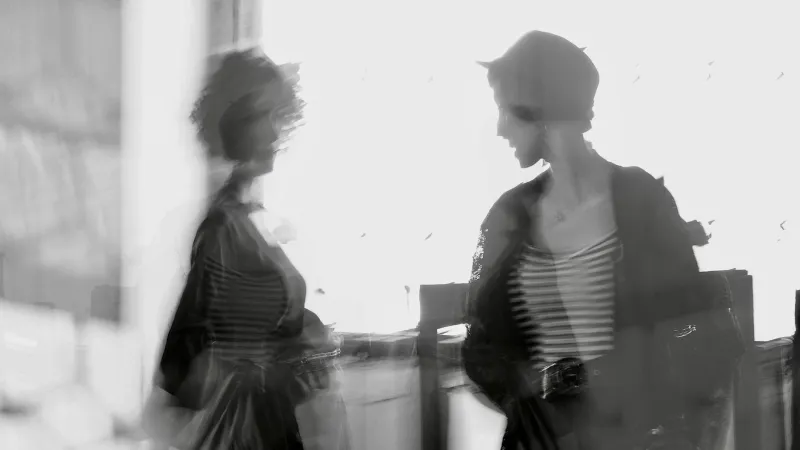
There's a specific kind of unease that settles in after watching certain Japanese horror films. It's not the lingering image of a pale figure crawling across the floor, and it's not the echo of a sudden sound cue. It's something quieter and way more unsettling — the nagging suspicion that you weren't actually watching the story you thought you were watching. That somewhere along the way, the film slipped something past you, and now you're not sure what was real and what wasn't.
That's not an accident. It's a design choice. And it might be the most underappreciated weapon in Japanese horror's entire arsenal.
The Difference Between Being Scared and Being Destabilized
American horror, broadly speaking, operates on a contract with the audience. You're shown something terrifying, you react, and the film moves on. The monster is real. The threat is external. Even when there are twists, they usually reframe the story in a way that makes everything suddenly more coherent, not less.
Japanese horror breaks that contract on purpose.
Instead of giving you a reliable window into events, it hands you a cracked mirror. The camera lingers on faces that don't quite react the way they should. Characters describe things that don't match what you saw on screen. Dream sequences bleed into waking life without warning, and the film often refuses to tell you which is which. By the time the credits roll, you're not just scared — you're genuinely unsure what version of reality you were inhabiting for the last ninety minutes.
This is the uncanny valley of storytelling. Not the visual uncanny valley of almost-human faces that horror fans already know well, but a narrative uncanny valley — a story that feels almost coherent, almost trustworthy, but is just off enough to make your brain work overtime trying to fill in the gaps.
Audition and the Art of the Bait-and-Switch
Takashi Miike's Audition (1999) is probably the clearest example of this technique working at full power. For the first half of the film, you're watching what feels like a quiet, melancholy drama about a widower looking for companionship. The tone is gentle. The pacing is slow. You're lulled into a very specific emotional register.
And then the film starts pulling the rug out — not all at once, but in small, disorienting increments. Whose memory are we in? Is the protagonist's perception of the woman he's pursuing accurate, or is it shaped by his own projections and grief? When the surreal sequences hit, Miike doesn't frame them as dreams. He just... lets them happen, without comment, and then moves on. The horror that follows lands so much harder because you've already been made to question whether you can trust the story you've been told.
That uncertainty is doing a lot of the work. You're not just horrified by what happens — you're horrified by the possibility that you misread everything leading up to it.
Subjective Camera as a Reliability Problem
One of the more technical ways Japanese horror fractures perspective is through the deliberate use of subjective camera work that doesn't announce itself as subjective. In American filmmaking, there's usually a visual grammar that signals "this is a point-of-view shot" — a slight fisheye lens, a handheld wobble, a cut to the character's face to confirm whose eyes we're looking through.
Japanese horror directors frequently skip those signals. The camera drifts into a character's perspective without warning and drifts back out just as quietly. You only realize later — sometimes much later, sometimes never — that what you were watching was filtered through a particular character's damaged or distorted consciousness.
Pulse (Kairo, 2001) by Kiyoshi Kurosawa does this constantly. The film's visual language is already deeply alienating — long static shots, characters who barely seem to occupy the same physical space even when they're standing next to each other. But there are sequences where it becomes genuinely unclear whether what we're seeing is happening in the physical world or has already crossed into something else entirely. Kurosawa doesn't explain it. He trusts the disorientation to do its job.
Why This Hits Different for US Audiences
American viewers are trained, from years of Hollywood storytelling, to expect narrative clarity. Even in ambiguous films, there's usually a "correct" interpretation that the text rewards if you look closely enough. We're puzzle-solvers by default. We want the pieces to fit.
Japanese horror, at its best, isn't offering you a puzzle with a solution. It's offering you a puzzle where some of the pieces belong to a different box entirely, and the image on the lid was never accurate to begin with. That's a fundamentally different ask, and it's one that can feel genuinely disorienting to audiences who came in expecting to figure something out.
But here's the thing — that disorientation is the point. When you can't trust the narrator, you can't find solid ground anywhere in the story. Every scene becomes suspect. Every character motivation becomes ambiguous. The horror isn't contained in specific moments; it spreads backward and forward through the entire film, infecting your memory of scenes you thought you understood.
The Narrator Who Doesn't Know They're Unreliable
What makes this technique especially effective in Japanese horror is that the unreliable narrators at the center of these stories usually aren't lying to you. They're not withholding information for dramatic effect. They're genuinely perceiving the world in a fractured way — because of trauma, grief, guilt, or contact with something that has warped their sense of reality beyond repair.
That's a meaningfully different kind of unreliability. It's not a twist you can feel clever for anticipating. It's a slow, accumulating sense that the person whose eyes you're looking through has been fundamentally changed by what they've experienced, and that you've been changed along with them just by watching.
Films like Dark Water (2002) build this almost entirely through atmosphere and small perceptual details that only add up to something coherent — or don't — in retrospect. The mother at the center of that film is clearly struggling, clearly not entirely reliable, and yet the film never once condescends to tell you where her perception ends and reality begins.
Dread Without a Source
This is ultimately why the unreliable narrator technique resonates so deeply with audiences looking for psychological horror over visceral thrills. Jump scares give you dread with a clear source and a clear endpoint. The thing appears, you react, it's gone. Your nervous system resets.
But when you can't trust what you're seeing? That dread has no endpoint. It follows you out of the theater. You keep turning it over, looking for the seam where the real story and the distorted story diverge — and sometimes you find it, and sometimes you don't, and both outcomes are unsettling in their own way.
Japanese horror figured out a long time ago that the scariest place it could take you wasn't on screen. It was inside your own head, after the film was over, still trying to figure out what you actually witnessed.
That's the kind of horror that sticks around.
