Smiling While They Destroy You: The Terrifying Civility of Japanese Horror
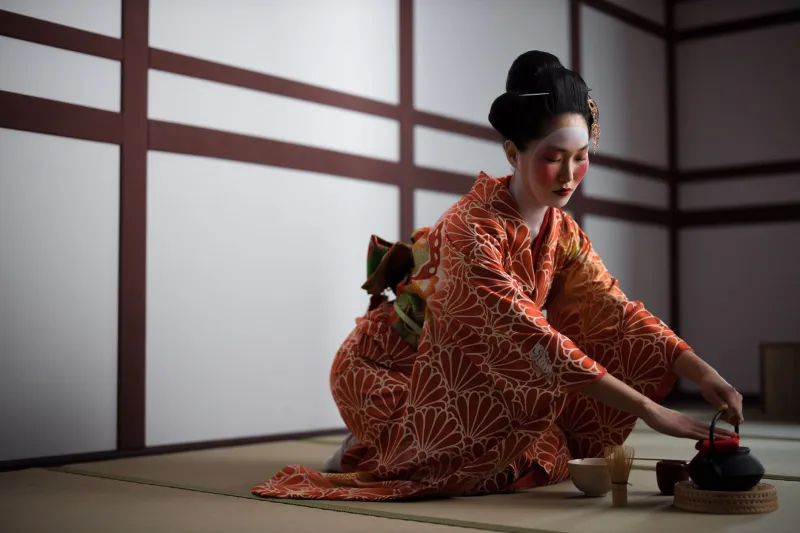
There's a moment in Takashi Miike's Audition that doesn't involve blood, doesn't involve screaming, and doesn't involve anything you'd normally flag as dangerous. A woman sits across a dinner table. She speaks softly. She thanks her companion for his time. She is, by every visible measure, being perfectly pleasant.
And it is absolutely terrifying.
If you grew up in the US, where horror movies generally signal danger through raised voices, sinister music, and characters making obviously bad decisions in obviously bad places, this kind of scene can feel disorienting. Why are you scared? Nothing is happening. And yet your gut is telling you to look away.
That's the whole trick. That's the entire engine.
Politeness as a Weapon
Japanese social culture places enormous weight on tatemae — the public face, the performed version of yourself that exists to maintain harmony and avoid conflict. It's not deception in the Western sense. It's closer to a shared agreement that everyone participates in, an unspoken contract that says: we will all pretend things are fine, even when they aren't, because the alternative is chaos.
Japanese horror filmmakers know this contract intimately. And they know exactly how to exploit it.
When a character in a Western horror film is dangerous, they usually telegraph it. They leer. They snap. They make comments that feel off. Hollywood has trained audiences to read threat through disruption — the moment someone breaks the social script, you know something's wrong.
Japanese horror inverts this entirely. The most dangerous characters are often the most composed. They follow the script too well. They're considerate, attentive, and warm in ways that should feel reassuring but somehow don't. The horror isn't in the break from civility. It's in the mask that never slips.
Asami's Quiet Violence
Look at Asami Yamazaki in Audition. For most of the film's runtime, she's a model of gentle femininity — soft-spoken, deferential, emotionally vulnerable in ways that make the male lead feel protective and chosen. She listens carefully. She expresses gratitude. She never raises her voice.
American audiences watching Audition for the first time often describe the film's final act as a gut punch not because of its content alone, but because of how thoroughly they were lulled. Asami's politeness wasn't incidental — it was the mechanism. The cruelty that comes later is horrifying precisely because it was hidden inside something that looked like grace.
Miike isn't just making a thriller here. He's making an argument about how violence hides inside social performance. The mask of civility doesn't just conceal the monster. In some sense, it is the monster.
Indirect Communication and the Horror of Implication
There's another layer to this that gets lost on Western audiences: the role of indirect communication.
In many American social contexts, directness is a virtue. Saying what you mean, asking for what you want, naming a problem out loud — these are considered signs of emotional health and maturity. The cultural ideal is clarity.
Japanese communication often works differently. Meaning is carried in implication, in what's not said, in the space between words. A question can be a threat. A compliment can be a warning. Silence can be the most loaded response in the room.
Films like Ichi the Killer exploit this brilliantly. Kakihara, the film's central villain, is almost mannerly in his worst moments. He frames extreme acts inside the language of obligation and gratitude. He talks about pain the way someone might talk about a deeply personal gift. The horror of his dialogue isn't in what he says outright — it's in what his phrasing implies, in the gap between his words and their meaning.
For American audiences, this gap is genuinely unsettling in a way that's hard to articulate. You can hear that something is wrong. You can't always pinpoint what. That ambiguity is doing exactly the work the filmmakers want it to do.
The Slow Realization
What separates this brand of horror from standard psychological thriller territory is its pacing. These films are patient. They let you get comfortable. They let you accept the civility as real, let you invest in the relationship, let you relax.
And then, gradually, without a single dramatic rupture, you start to notice the edges.
A question that was asked once gets asked again, slightly differently. A kindness is offered that requires something in return, though no one says so. A smile stays on a beat too long. The social contract is still being performed perfectly — but you've started to realize that the performance is the point, that there's nothing behind it except calculation.
This is a specific kind of dread that Hollywood almost never deploys, partly because American audiences have been trained to expect threat to announce itself, and partly because the cultural mechanics that make it work don't translate easily. You have to understand, at least intuitively, what it feels like to be trapped inside politeness — to be unable to name what's happening because naming it would be rude — to feel the full weight of what these films are doing.
Why It Lands Harder Than Any Jump Scare
Here's the thing about jump scares: your nervous system recovers from them in about thirty seconds. They're a spike of adrenaline followed by relief. They don't stay with you.
The dread that comes from watching someone smile at you while they plan your destruction doesn't go away that fast. It attaches to things you already know — awkward conversations, interactions where you sensed something was off but couldn't say why, moments when you smiled back at someone and wondered afterward why you felt so unsettled.
Japanese horror at its best doesn't just scare you in the theater. It makes you slightly more suspicious of ordinary kindness. It makes you replay conversations. It makes politeness feel, just a little, like a door you can't see behind.
That's not a cheap trick. That's craft. And it's why this particular strain of horror has stayed in people's heads long after the credits rolled on everything else.