Dread on Delay: How Japanese Horror Turns Patience Into Your Worst Enemy
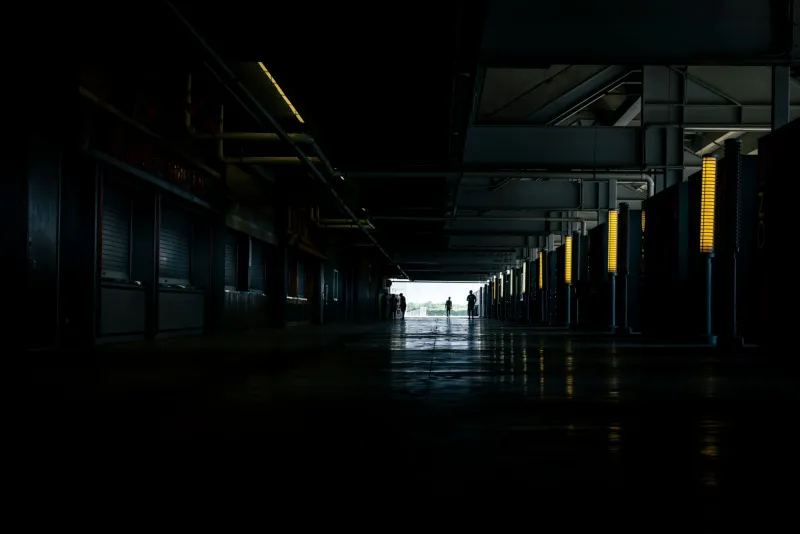
There's a moment in Kiyoshi Kurosawa's Pulse where a character walks slowly down a hallway toward a figure standing motionless in the corner of a dark room. Nothing jumps out. No sting of strings. No sudden cut. The figure just... exists there, at the edge of the frame, and the camera holds on it for what feels like an eternity. By the time anything actually happens, you've already been destroyed. The scare almost feels like a mercy.
That's the whole game. And if you've been mainlining American horror — the kind built on boom-box sound design and cats leaping out of closets — Japanese horror's pacing can feel almost rude at first. Like it's wasting your time. But that's exactly what it wants you to think.
The Jump-Scare Is a Vending Machine
Let's be honest about what a jump-scare actually does. It hijacks your startle reflex, spikes your adrenaline for about four seconds, and then evaporates. It's a vending machine transaction — you put in your attention, you get a brief jolt, and then you're back to baseline. Rinse, repeat. Hollywood has been running this machine at full capacity for decades, and audiences have gotten pretty good at seeing the transaction coming. You tense up when the music drops out. You brace when a character opens a door slowly. The fear becomes almost mechanical.
Japanese horror, particularly the wave of films that came out of the late '90s and early 2000s — what a lot of people just call J-horror — operates on a completely different economic model. Instead of selling you jolts, it's building something. Accumulating atmosphere the way water fills a room. By the time you realize you're in trouble, you're already in over your head.
Kurosawa's Long Game
Kiyoshi Kurosawa — no relation to Akira, for anyone who's new here — is probably the most disciplined practitioner of this approach working in Japanese genre cinema. His films move like they have all the time in the world, and that unhurried quality is a deliberate act of psychological aggression.
In Cure (1997), Kurosawa builds tension not through action but through a creeping sense that something fundamental about reality is wrong. Scenes run longer than you expect. Conversations end in strange places. The camera lingers on empty spaces. You keep waiting for the film to tip its hand, and it keeps refusing. By the time the horror becomes explicit, you're not just startled — you're unsettled at a level that sticks around. People who watched Cure years ago still describe feeling vaguely wrong for days afterward. That's not an accident.
What Kurosawa understands is that the human brain is a threat-detection machine. When you're watching a horror film, your brain is constantly scanning the frame for danger, running predictions, trying to stay one step ahead. A jump-scare cheats that system. But a long, slow build uses that system against you. The longer your brain spends predicting a threat without resolution, the more exhausted and vulnerable it becomes. By the time the payoff arrives, your defenses are already shot.
Shimizu and the Architecture of Dread
Takashi Shimizu works the same territory but with a different toolkit. The Ju-On films are famous for their fractured, non-linear structure — scenes that don't connect the way you expect, timelines that fold back on themselves — but what often gets overlooked is how much of the horror lives in the space between cuts.
There's a sequence in the original Ju-On: The Curse where a woman pulls her blanket over her head in bed, and then Shimizu cuts to a wide shot of the room. Nothing moves. The shot holds. Then a hand — barely visible — appears at the edge of the blanket. The camera doesn't rush to it. It just stays wide, lets you find it yourself, lets your eyes do the work. The moment you notice it, your stomach drops, and then the film moves on almost casually, like it didn't just ruin you.
That casualness is key. American horror tends to frame its scares as events — the music swells, the editing accelerates, the film basically points at you and says be scared now. Japanese horror frequently does the opposite. It presents the horrifying thing with the same flat affect as everything else, which somehow makes it worse. There's no signal that you're supposed to react. The horror just arrives, matter-of-fact, and leaves you to deal with it alone.
Anticipation Is the Actual Monster
Here's the thing that a lot of Western viewers miss on their first pass through J-horror: the anticipation isn't just a delivery mechanism for the scare. It is the scare. The dread you feel in the long hallway shot, in the held wide angle, in the scene that refuses to cut — that's not a waiting room. That's the main event.
Psychologists have a term for this: anticipatory anxiety. It's the fear of a bad thing that hasn't happened yet, and research consistently shows it can be more distressing than the bad thing itself. Japanese horror directors seem to have figured this out intuitively and built their entire craft around exploiting it. They're not making films about scary things. They're engineering experiences designed to keep your nervous system in a state of low-grade alarm for as long as possible.
This is also why J-horror tends to linger after you've finished watching it. A jump-scare is over when it's over. But a film that's spent ninety minutes training your brain to expect dread at any moment? That conditioning doesn't just switch off when the credits roll. You take it home with you. You think about it in the shower. You notice shadows differently for a few days. The film has done something to you, not just to your viewing experience.
Why This Hits Different for US Audiences
American audiences raised on the Blumhouse model — fast, efficient, jump-scare-heavy — sometimes describe J-horror as slow or boring on first watch, and then find themselves unable to stop thinking about it a week later. That's the delayed detonation working exactly as intended.
If you're coming to something like Pulse, Cure, or the original Ju-On expecting the usual horror rhythm, you're going to spend the first act feeling like nothing is happening. That's fine. Stay with it. What's actually happening is that the film is getting inside your head through the back door, building a structure of unease that you won't even fully feel until you're somewhere else entirely — lying in bed, maybe, thinking about that hallway shot, wondering why it's still bothering you.
That's the slow burn betrayal in action. You thought you were watching a movie. The movie was watching you back, and it was patient enough to wait until you'd let your guard down completely.
Some horror wants to scare you. Japanese horror wants to haunt you. And it's really, genuinely good at it.