The Room Is the Monster: How Japanese Horror Turns Architecture Into Pure Dread
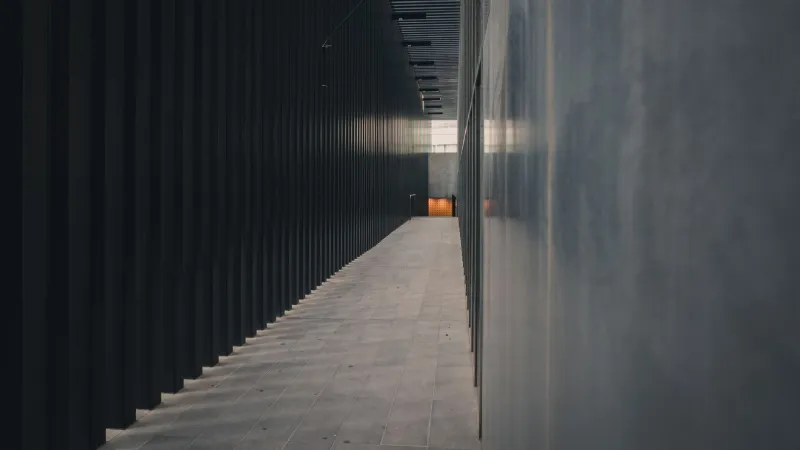
There's a moment in Dark Water (2002) where Yoshimi stands in the hallway of her new apartment building and just... looks. The corridor stretches ahead of her — water-stained ceiling tiles, flickering fluorescent light, walls that feel about two inches too close together. Nothing jumps out. Nobody screams. And yet your skin is absolutely crawling.
That's not an accident. That's architecture doing exactly what director Hideo Nakata designed it to do.
Japanese horror has always understood something that American horror largely ignores: the space a story inhabits isn't just a backdrop. It's a character. Sometimes it's the villain.
Walls That Close In (And Mean to)
When most US horror films think about setting, they think big. Sprawling haunted mansions. Remote cabins with acreage. Wide-open cornfields at night. American horror loves scale — the idea that danger has room to chase you.
Japanese horror goes the opposite direction. It compresses.
Think about the apartment in Dark Water. It's not just small — it's deliberately suffocating. Low ceilings. Narrow doorways. The kind of place where you can hear your neighbor breathe through the walls. Nakata frames his shots to make rooms look even tighter than they are, placing the camera low and wide so the ceiling presses down into the frame. You feel the square footage shrinking with every scene.
Or consider Pulse (Kairo, 2001), Kiyoshi Kurosawa's slow-burn nightmare about loneliness and technology. The spaces in that film are almost perversely empty — abandoned offices, half-lit apartments where a single person rattles around like a marble in a shoebox. The horror there isn't compression; it's the wrong kind of openness. Rooms that are too big for the person inside them, corridors that go on slightly too long. The architecture communicates isolation before a single line of dialogue does.
Both approaches weaponize space. They just use different calibers.
Takashi Miike and the Room You Can't Unsee
If you've seen Audition (1999), you know the scene. You've probably tried to un-know it.
But here's what's interesting: the horror of that film's climax is inseparable from where it happens. The room Aoyama wakes up in isn't stylized or gothic. It's just a room — ordinary, domestic, the kind of beige-walled space that exists in millions of Japanese apartments. Miike makes no effort to dress it up as a horror set. The normalcy is the point.
When terrible things happen in extraordinary places — a Gothic castle, a fog-drenched cemetery — your brain files it under that's a horror setting. When terrible things happen in a room that looks exactly like your cousin's living room in Glendale, your brain has nowhere to file it. The ordinariness of the space becomes deeply, personally threatening.
Miike understood that the most disturbing room is the one that looks like home.
Why Western Audiences Feel It Without Understanding It
Here's the thing about spatial horror: it works even when you can't articulate why.
American viewers watching Dark Water for the first time often describe feeling uneasy in a way they struggle to explain. "It just felt off," is a phrase that comes up a lot. They're not wrong — it is off. But the source of that discomfort is frequently architectural rather than narrative. It's the ceiling. It's the framing. It's the way the elevator doors take just a beat too long to close.
US audiences are primed to look for plot-level horror: the monster reveal, the jump scare, the twist. Japanese horror is often doing its most important work in the negative space around those moments — in the dimensions of a room, the angle of a staircase, the particular quality of light in a corridor that hasn't been cleaned recently enough.
When American remakes of these films fail (and they fail a lot), spatial language is almost always part of what gets lost. The 2005 Hollywood version of Dark Water with Jennifer Connelly isn't a bad film, but watch both versions back to back and notice how the American one opens up the spaces. Brighter lighting. More visual breathing room. The apartment feels like an apartment instead of a trap. The story is largely the same. The dread is completely different.
Corridors as Psychological Weapons
The corridor is probably the single most important architectural element in Japanese horror, and it's worth spending a moment on why.
A corridor forces linear movement. You can't go sideways. Your options are forward, back, or stop — and stopping in a corridor feels wrong in a way that stopping in an open room doesn't. There's an implicit pressure to keep moving, which means whatever is at the end of the corridor is getting closer whether you like it or not.
Japanese horror directors — Nakata, Kurosawa, Shimizu — use corridors obsessively, and they frame them in ways that emphasize their tunnel-like qualities. Long lens compression. Low angles. The end of the hallway just slightly out of focus.
In Ju-On: The Grudge, Takashi Shimizu practically turns corridor geometry into a recurring motif. Characters don't just walk down hallways — they get swallowed by them. The Saeki house's staircase and upper corridor function as a kind of throat. Once you're in there, the house has you.
What American Horror Keeps Building Wrong
This isn't just a critique of remakes. It's about a fundamental difference in how horror is conceptualized at the production design stage.
American horror tends to build sets that look scary — deliberately distressed surfaces, unusual angles, visible decay. The design communicates danger upfront. You walk into the space and immediately understand: this is a bad place.
Japanese horror is more interested in spaces that become scary through context and framing. The Saeki house doesn't look particularly menacing in a wide shot on a sunny day. Neither does Yoshimi's apartment building. The horror is constructed through the camera's relationship to the space over time, not baked into the production design from the jump.
It requires patience from filmmakers and audiences alike. And patience is, unfortunately, not always what American horror studios are selling.
The Takeaway (If There Is One)
Next time you're watching a Japanese horror film and you feel that low-grade, hard-to-name unease settling in, try paying attention to the room instead of the plot. Notice how the camera sits in the space. Notice what the ceiling looks like. Notice whether the corridors have endings you can see.
The story might be about a ghost or a curse or a cursed videotape. But the horror might be happening in the architecture the whole time — in the walls, in the angles, in the two extra feet of hallway that shouldn't be there but somehow is.
Japanese horror knows that the scariest thing isn't always what's lurking in the room.
Sometimes it's just the room.