Why Japanese Horror Turns 'Yes' Into the Scariest Word You'll Ever Say
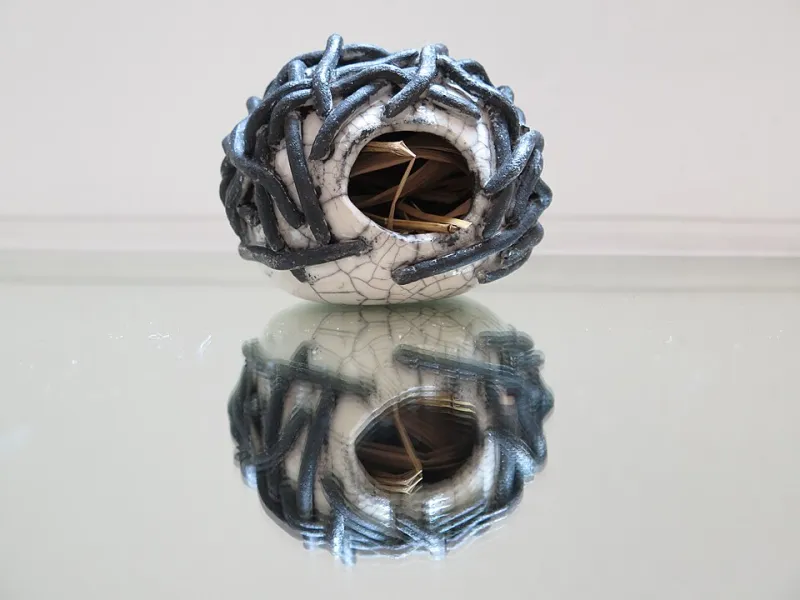
Photo: Elena Lombardi, CC BY-SA 2.0, via Wikimedia Commons
American horror has a pretty reliable formula for getting characters into trouble. Someone ignores a warning sign. Someone splits up from the group. Someone says "I'll be right back." We've been trained to spot these moments, lean forward, and mutter don't do it at the screen.
But Japanese horror operates on a completely different set of trip wires — and most US audiences don't even know they're stepping on them.
The trap isn't stupidity. It's politeness. And once you understand that, a whole genre of film suddenly gets a lot more terrifying.
The Invisible Cage of Social Obligation
Japan operates within what sociologists often describe as a high-context, collectivist culture. That's a clinical way of saying that the group comes before the individual, that harmony is a value worth protecting even at personal cost, and that saying no to someone — especially someone in a position of authority or intimacy — carries a psychological weight that most Americans simply don't carry in their daily lives.
In the US, we're pretty comfortable with the word no. We celebrate it. There's an entire self-help industry built around setting boundaries, declining invitations, and protecting your personal space. "No is a complete sentence" is practically a bumper sticker.
In Japan, a flat refusal can feel like a social rupture. The cultural expectation is to find a way to accommodate, to soften, to deflect without directly confronting. And Japanese horror filmmakers — the really sharp ones — have figured out that this instinct to appease is a door that opens inward, and something genuinely awful can push through it.
Audition's Masterclass in Weaponized Consent
Takashi Miike's Audition (1999) is the most precise surgical demonstration of this dynamic ever put to film. On its surface, it's the story of a widower named Shigeharu Aoyama who holds a fake film audition to find a new wife. He's drawn to Asami, a quiet, reserved woman who seems almost too good to be true.
And here's where the film does something genuinely sophisticated: Aoyama knows something is off. He has access to information that should stop him cold. But every time he approaches the edge of discomfort, social obligation pulls him back. He doesn't want to seem rude. He doesn't want to accuse someone who might be innocent. He doesn't want to disrupt the fragile emotional connection they've built.
Miike isn't just building suspense. He's documenting how a man's inability to act on instinct — because acting on instinct would be impolite — leads him directly into catastrophe. Asami doesn't trick Aoyama in the traditional horror sense. She simply allows his own social conditioning to do the work for her. Every time he could have walked away, courtesy held the door shut.
For Japanese audiences, this probably lands with a specific, visceral recognition. For American audiences, it can initially read as the protagonist being inexplicably passive. But that gap in interpretation is the whole point — and it's worth sitting with.
The Collective Weight That Drags You Under
This mechanic shows up across the genre in different configurations. Think about the structure of a film like Ringu. Reiko Asakawa doesn't spread the cursed tape out of malice or even fear alone — she spreads it because she can't bear the thought of her son dying. The curse exploits the most powerful social bond there is: maternal obligation. It doesn't ask her to do something evil. It asks her to do something a mother does. And that's exactly why it works.
Or consider how many J-horror antagonists operate through invitation and proximity rather than brute force. The onryō — the vengeful female ghost that defines so much of the genre — doesn't typically burst into spaces uninvited. She arrives through channels you opened. A video you watched. A phone you answered. A door you unlocked for someone who seemed to need help.
These aren't passive narrative choices. They're deeply cultural ones. The horror lives in the spaces where obligation and danger overlap.
When 'Ichi' Loves You, You Don't Get to Refuse
Miike's Ichi the Killer (2001) takes this in a more extreme and deliberately provocative direction. The film is drenched in violence and transgression, but underneath the shock value is a genuinely disturbing portrait of what happens when social and emotional need becomes weaponized. Ichi himself is a character defined by his inability to separate his internal world from external expectation — he acts on what he's been conditioned to act on, not on any coherent personal agency.
The horror in Ichi isn't just the gore. It's the portrait of a person so thoroughly shaped by external pressure and manipulation that he's essentially a tool. That's a specific kind of dread — the idea that your sense of self, your instincts, your very responses to the world around you, could be engineered by someone who understands how obligation and shame work better than you do.
What American Audiences Miss (And Why It Matters)
When US viewers encounter these films, there's a common frustration: why didn't they just leave? It's the same energy we bring to haunted house movies where the family doesn't move out after the first supernatural incident. We interpret the failure to exit as a plot convenience rather than a cultural reality.
But that reading flattens something important. In Japanese horror, the inability to leave isn't laziness or stupidity — it's the monster itself. The social structure is the haunted house. The obligation is the curse. The thing that traps the protagonist isn't a locked door; it's the invisible architecture of what they owe to the people around them, or what they believe they owe.
For American audiences engaging with this genre seriously, there's real value in sitting with that discomfort and asking: where are my own invisible doors? What social pressures do I navigate that I've never fully examined? When have I said yes to something because I didn't know how to say no without it costing me something?
Those questions don't have easy answers. Which is probably why Japanese horror keeps asking them.
The Politeness Is the Point
The genre's best filmmakers aren't using cultural specificity as decoration. They're using it as architecture. The reason these films feel so different from American horror — so patient, so quiet, so weirdly personal — is because they're built around a different understanding of where vulnerability lives.
In Hollywood horror, danger usually comes from outside. The killer breaks in. The monster arrives. The threat is external and identifiable.
In Japanese horror, the danger is already inside. It's sitting in the room with you, wearing the face of someone you feel obligated to accommodate. And it's waiting, very patiently, for you to smile and say yes.
That's not just scary. That's genuinely unsettling in a way that stays with you long after the credits roll — because unlike a slasher, it doesn't require a masked stranger. It just requires you to be who you already are.